
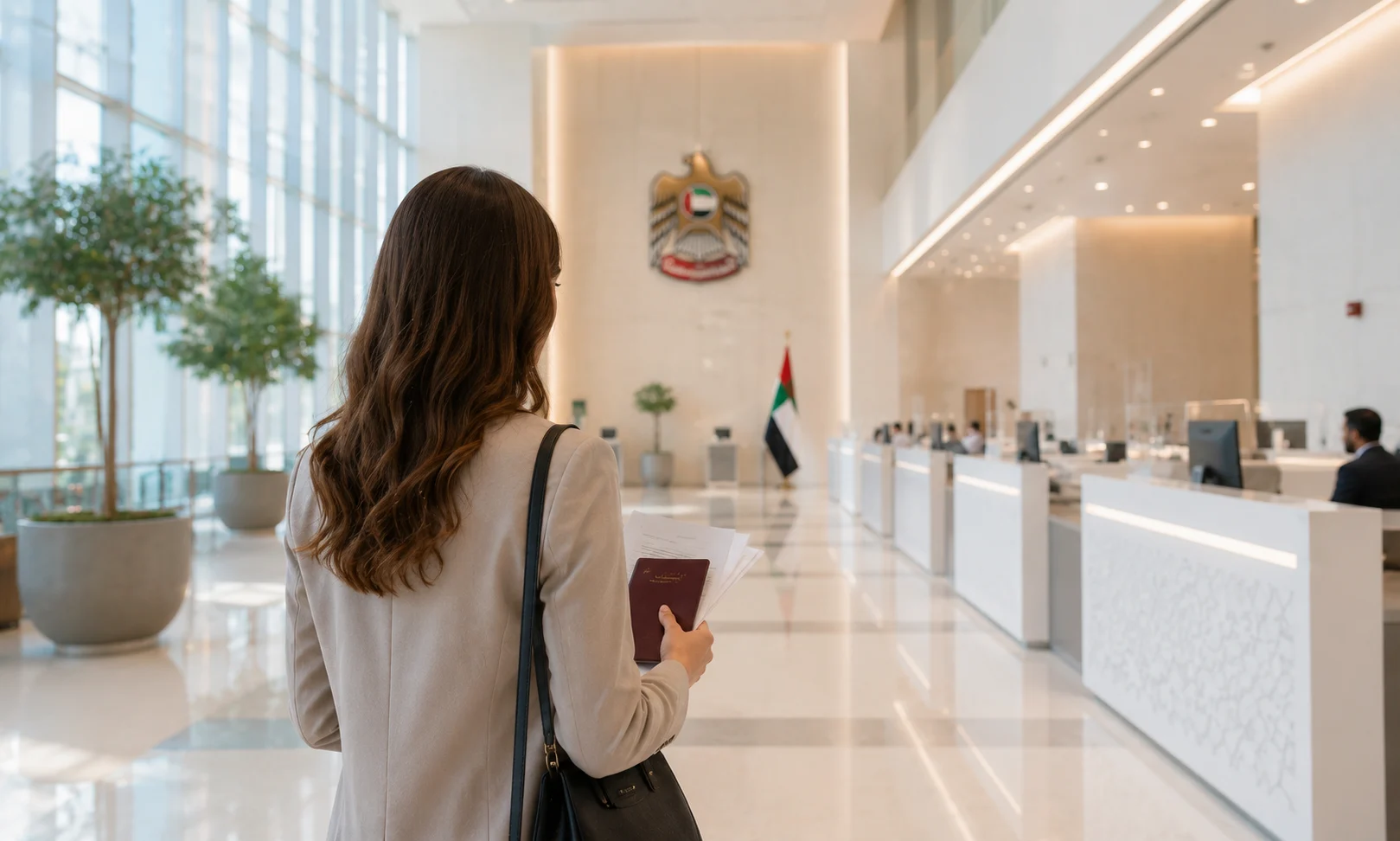
The UAE visa process is not complicated, but it is strict. One wrong document, one missed step, or one wrong category can send you back to the start. What should take 3 to 4 weeks can easily turn into 3 to 4 months. The UAE government’s official visa types guide sets out every residency category and the rules for each one.
For UK nationals, the visa is often the last thing people think about and the first thing that goes wrong. Most of the delays we see aren’t caused by complex legal problems. They’re caused by avoidable errors that experienced applicants simply don’t make. See more on MoveToUAE.co.uk.
Here are the mistakes that cause the most delays, and what to do instead.
Mistake 1: Picking the Wrong Visa Category
What happens if you apply for the wrong UAE visa type?
If you apply for the wrong visa category, the application is rejected and you have to start again from the beginning. There’s no amendment process. A freelance visa rejection doesn’t automatically roll into a company formation visa. Each category has its own application, its own fees, and its own processing time. A wrong call here costs 4-6 weeks at minimum.
UAE visa types for UK nationals covers all seven routes to UAE residency. It’s the most valuable 30 minutes you can spend in the pre-move planning phase.
The most common category errors we see:
Applying for an employee visa before the company formation is complete. An employee visa needs an active sponsor with a valid trade licence. If the company isn’t fully set up yet, the visa application fails.
Applying for a freelance visa when you’re a company shareholder. Freelance visas and company shareholder visas are separate categories. If you’ve formed a company, your visa comes through the company, not through a freelance permit.
Applying for a remote work visa when you are doing UAE based work. The remote work visa only covers work for employers and clients outside the UAE. If you plan to invoice UAE customers, you need a different route.
Mistake 2: Unattested documents
Document attestation is the step most UK applicants do not know about until it is too late.
For UAE residency, documents like your education certificates, marriage certificate, and birth certificate need to be attested in a set order. First by the UK Foreign, Commonwealth & Development Office, then legalised by the UAE Embassy in London.
This takes time. If it is done properly, expect 2 to 4 weeks per document. Most people only find out they need attested documents after they have already started the visa application. Then everything slows down while the attestation catches up.
If you already have a degree certificate, marriage certificate, or birth certificate to deal with, start the attestation first. It is usually the thing that sits on the critical path.
Some documents, like police clearance certificates, follow a different process. A UK DBS check is not the same as a UAE accepted police clearance. The UAE usually wants an ACRO Criminal Records Office certificate, apostilled by the FCDO. Different document, different process, different timeline.
Mistake 3: The Wrong Free Zone Choice
This one sits between the company structure decision and the visa application. It affects both.
Not all UAE free zones issue all types of visas. Some free zones cap the number of visas a company can hold. Some free zones have specific restrictions on which activities qualify for a resident visa. A few free zones don’t offer residency visas at all to their licence holders.
Understanding freezone vs mainland Dubai is the starting point: the choice of jurisdiction directly determines which visa routes are open to you, how many visas you can hold, and your renewal conditions. The UAE company formation service covers this decision and how it affects your visa type, visa count, and renewal conditions. Check this before you commit to a zone you can’t change easily.
A practical example: a UK national sets up a free zone company in a low-cost zone that limits licences to one visa per company. They then need to sponsor a family member. The free zone can’t issue a second visa. They need to move the company to a different zone or form a new entity. That’s 8-12 weeks of extra setup time.
Check visa allowances and restrictions before you commit to a free zone. The cheapest free zone is not always the right one for your situation.
Mistake 4: Overstaying the Visit Visa
Some UK nationals wonder can you just move to Dubai: arriving on a visit stamp and sorting the visa from inside the country. It’s possible in some cases, but the clock starts ticking the moment you land.
UK nationals get 90 days visa-free on entry to the UAE. That’s the tourist or visitor entry stamp.
If you enter on a visit stamp and your UAE residency visa application takes longer than expected, you can find yourself overstaying the 90-day limit. UAE overstay fines are AED 200 per day. Small individually, but real over weeks.
More importantly: an overstay status can complicate the residency application itself. An applicant who’s overstayed isn’t technically in legal status. Some visa categories require you to exit and re-enter on a proper entry stamp before the residency application can proceed.
The fix is simple: if your application is running over 60 days from arrival, take a short trip out of the UAE (an overnight to Oman or a weekend in Europe resets the entry stamp) and re-enter fresh. Don’t let the clock run to zero.
Mistake 5: Missing the medical test window
Every UAE residency visa needs a medical fitness test inside the UAE. The test includes a blood test and a chest X ray. You cannot replace it with a UK medical report.
The medical test is time sensitive. Once you get the appointment, you usually have 30 to 60 days to complete it before the slot expires. Miss it and the application pauses while a new appointment is booked.
The test itself takes 1 to 2 hours at a government approved HAAD or DHA medical centre. Results usually come back in 24 to 48 hours. If you test positive for any condition that makes you inadmissible, such as active TB or certain communicable diseases, the residency application is refused and you have to leave.
UK applicants are rarely refused on medical grounds. The bigger issue is timing. If you leave the test too late, it becomes a real delay.
Mistake 6: Not having a valid UAE address
Most UAE residency applications ask for proof of a UAE address. For a company formation visa, that is usually the registered office address on the trade licence. For an employment visa, it is the employer’s address.
The problem starts when people try to use a friend’s address or a hotel they are staying in for a few nights. The address on the application needs to match a verifiable registered address. The residency authority checks.
If you are a freelancer or a company owner without a physical office, a virtual office address from a licensed provider can cover this. Free zones often include a registered address in the licence package. But it has to be a real address that is registered with the correct authority, not just a mailing address.
Do not leave the address question to the last minute. It needs to be sorted before you start, not after.
Mistake 7: Applying with an expired passport or stale documents
UAE residency visas need your passport to be valid for at least 6 months beyond the visa validity period. A 2 year residency visa on a passport that expires in 18 months is a problem.
The same goes for supporting documents. An attested education certificate that was legalised more than a year ago may be questioned. Some authorities want a fresh attestation. Check the rules for your visa category before you submit anything.
Renew your UK passport before you start the UAE visa process if there is any doubt about the expiry date. The UK Passport Office can take 6 to 10 weeks for a standard application. If your timeline is tight, use the fast track service.
Frequently asked questions
How long does a UAE residence visa application take?
For a company formation or employment visa, 3 to 4 weeks is the normal timeline once all documents are ready. Free zone companies can be faster. If documents need attestation or corrections, add another 4 to 6 weeks.
Can I stay in the UAE while my visa is being processed?
Yes, on your initial entry stamp. Just watch the 90 day limit. If the application is running long, do an exit and re entry to reset the clock.
What’s the most common reason UAE visa applications are rejected?
Wrong document format or missing attestation. That causes most of the delays and rejections we see. The document rules change by visa category, so check the list for your route before you submit.
Can I work in the UAE while waiting for my visa?
No. You can only work legally in the UAE once your residency visa and Emirates ID are issued. Working on a visit stamp is not allowed.
Do I need a UAE bank account before applying for a visa?
No. You can open a UAE bank account after your residency visa and Emirates ID are issued. Most UAE banks won’t open accounts for non-residents. Understanding UAE banking for UK expats explains the sequencing: visa first, Emirates ID second, bank account third.
How We Help
The UAE visa process is one where mistakes compound. A wrong category leads to rejection, rejection leads to restart, restart adds weeks, and weeks stretch into months. We handle the application correctly from the start: right category, right documents, right attestation sequence, right timing.
If you’re ready to move forward, the UAE residence visa service takes it from here.