
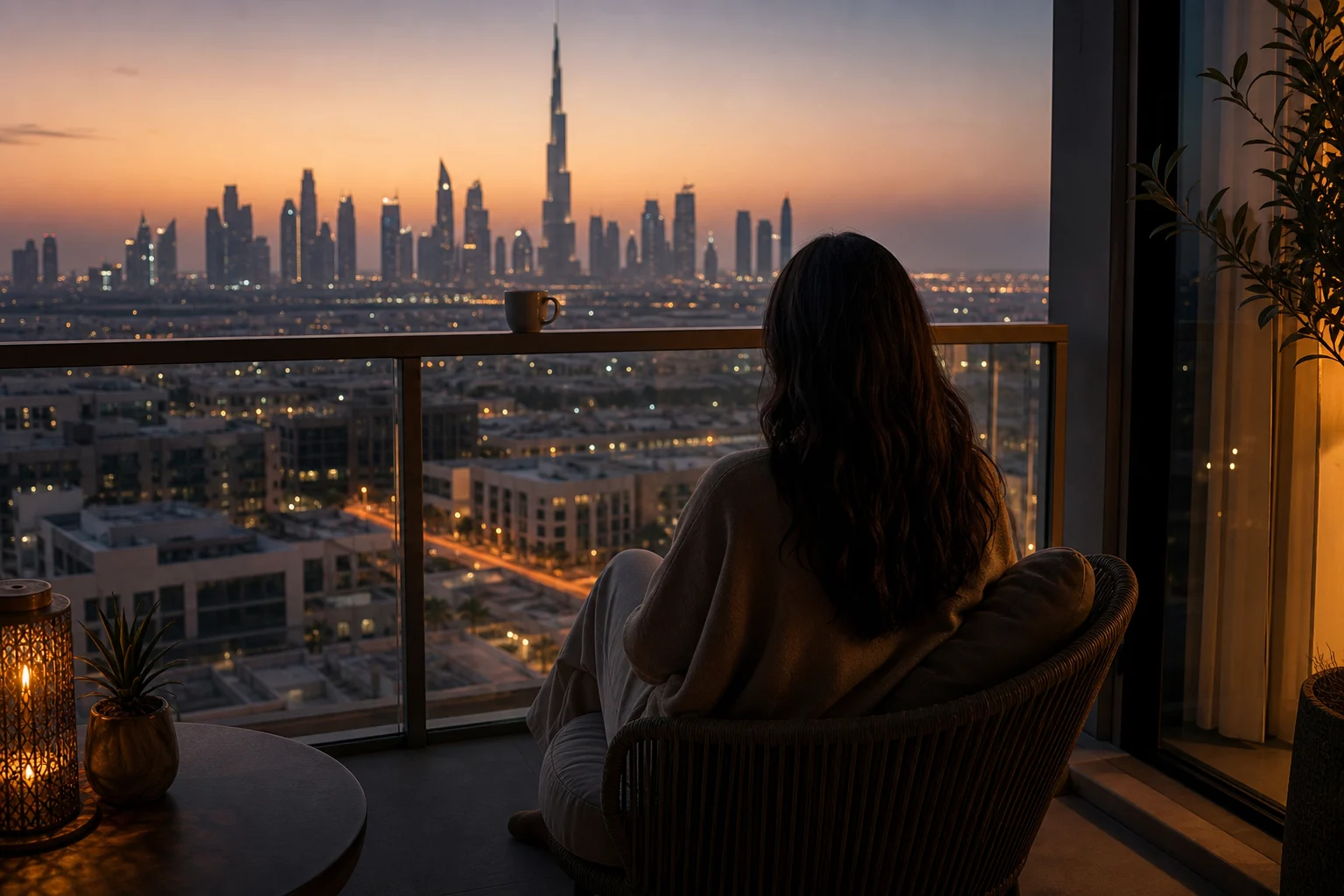
Social media makes Dubai look like a permanent holiday. Rooftop pools, brunch culture, fast cars, golden sunsets over the Marina. Some of that is real. But the people posting it are not showing you the 45-degree commute, the first three months of bureaucratic chaos, or the Sunday afternoons when home feels far away. This article is the version they do not post.
What the first few weeks actually look like
Most people arrive in Dubai expecting to feel settled within a month. It usually takes longer. The first few weeks are heavy on admin in a way that UK life does not prepare you for.
You are sorting your residency visa, opening a bank account, getting your Emirates ID processed, registering the car, finding a school place, setting up utilities, and learning that every process here has a slightly different portal, a slightly different document list, and a queue.
It is not impossible. Tens of thousands of UK families do it every year. But it is not the neat, fast version people imagine. Give yourself 6 to 8 weeks before you expect things to feel normal.
The summer heat is more than you expect, even if you have read about it. 42 to 46 degrees from June to September is not just hot. It changes how you live. You move between air-conditioned spaces. You do not walk outside at midday. School runs happen from the car. Some people find that hard. Others adjust within weeks. It depends on how well you handle heat and how much indoor time you can take in the worst months.
What surprises people most
Driving. Dubai is a car city. There is a Metro, but it does not cover most family areas. You will drive more than you ever have before. Traffic is heavy at rush hour, usually 7am to 9am and 5pm to 7pm, and the highway culture takes getting used to. Speeds are higher than UK motorways, lane discipline is looser, and the number of near misses in the first few weeks shocks almost every UK arrival. You do adjust. But it is a real adjustment.
The social scene works differently. In the UK, many friendships build slowly over years. The pub, the school gate, colleagues you have known forever. In Dubai, the expat scene moves faster. People know they may only be here for 2 to 3 years. Friendships form quickly and strongly, then people leave. Some people love that pace. Others find it tiring or shallow. The school gate really is the social hub for families with children. That is where most people build their network.
Working culture is different. The work week runs Sunday to Thursday. Friday is the holy day. Saturday is the second day off. That sounds small, but it takes months to stop treating Sunday like a rest day. Business hours also differ from UK clients if you work with UK companies, so messaging can lag. Meetings can be last minute, cancellations happen more often, and hierarchy matters more in many UAE businesses than it does in UK offices.
Bureaucracy is real. It is improving every year, but UAE government processes still involve physical documents, in-person visits, and steps that do not always match what you read online. Things get stamped, translated, attested, and stamped again. Leave extra time for anything official. This is the part people complain about most in expat groups. Once you are set up, the admin eases off a lot.
The cost of living surprises people in both directions. Groceries, alcohol, and dining out are more expensive than in the UK. School fees are very high. But no income tax means many UK professionals still come out ahead overall, despite the higher costs. Calculating your UAE number, the income threshold where the move makes financial sense, is covered in the financial break-even analysis.
What’s genuinely better than expected
The speed of healthcare is one of the most talked-about differences. You can see a GP today, have an MRI tomorrow, and see a specialist within the week. People who have spent months on NHS waiting lists often find that shocking in a good way.
Getting everyday things done in Dubai, outside of government admin, is very easy. Food delivery is fast and cheap. Maintenance services come quickly. Delivery from big retailers is often same day or next day. The service economy here runs well.
Safety is real. Dubai is one of the safest cities in the world. Families with children often say they feel more relaxed here than in UK cities. Children have more independence. Street crime is basically not a daily worry.
The outdoor lifestyle in the cooler months, from October to April, is genuinely good. The beach, parks, outdoor markets, desert trips, and long weekends to Oman or Bahrain give you plenty to do, and the weather makes it enjoyable.
International schooling at the top end is strong. If you get into the right school, the teaching standard and facilities often go beyond what many families would access in the UK without paying high private school fees.
What’s harder than expected
Homesickness shows up at odd times. It is not always about missing people, though that matters. It is missing routine. Missing a grey Saturday morning with the same newspaper you have read for years. Missing a pub you have gone to for a decade. Missing the version of yourself that only existed in that setting. Most people move through it, but it is real in the first 12 to 18 months.
The transience of expat life takes time to get used to. You build a friendship group, then someone’s contract ends and they go back to London. You find a great teacher for your child, then she returns to Australia. That cycle repeats for as long as you stay. Some people cope well with it. Others find it draining.
There is also the lack of deep connection to place over time. Dubai is a city built on movement. People arrive and leave. You get less of the long-term community fabric that UK towns and cities build over generations. If deep roots and long-term neighbours matter to you, that can feel like something is missing.
The summer months can feel isolating for families where one parent stays home with young children. When it is 45 degrees outside, leaving the flat becomes difficult. School holidays also land in the hottest months. Many families send one parent and the children back to the UK for July and August.
Cultural differences: UK vs UAE
This section matters, and it is worth reading before you arrive rather than learning on the job.
Workplace norms
UAE workplaces, especially those with a high proportion of Middle Eastern or South Asian employees, are often more hierarchical than UK ones. Disagreeing with a senior openly in a meeting, which is fairly normal in UK office culture, can cause embarrassment or create a problem. Constructive challenge still happens, but usually through one-to-one conversations, relationship building, and showing respect first.
Decision-making can also be slower. Things go up the chain more often. Consensus works differently. Patience with the pace of business decisions is a useful skill here.
If you work in a Western-owned or managed company, the culture will often feel more familiar. But even then, client relationships and outside partners still follow UAE norms.
Gender dynamics
The UAE has changed a lot over the last decade. Women hold senior roles in business, government, and medicine. Female professionals from the UK usually find the work environment workable, and in some industries very welcoming.
That said, some social and workplace dynamics are still more traditional than the UK equivalent. Women who travel or work alone face no practical barriers. Dubai is safe and functional for women on their own. But it helps to understand that gender dynamics can be different, especially in more conservative settings.
Alcohol rules
Alcohol is available in Dubai. You can drink in licensed venues like hotels, certain restaurants, and bars, and you can buy from licensed alcohol shops such as Maritime City and MMI outlets with a personal liquor licence, which is now mostly automated and low friction. You can drink in your home. You cannot drink in public, cannot drink and drive at any level, and should not be visibly drunk in public spaces.
That is different from Abu Dhabi and the Northern Emirates, which are stricter. In Dubai specifically, alcohol access for expats is fairly straightforward once you understand the system.
During Ramadan, the rules tighten further. Alcohol may not be served until sunset in some venues. Eating and drinking in public during daylight hours is not permitted. Music is lowered in public places. It is a real cultural period that lasts 30 days and does affect daily life, especially in the first year. By year two, most expat families take it in stride.
Dress code
The practical rule for Dubai is simple: modest in public spaces, anything goes in private spaces and licensed venues. Men and women should cover shoulders and knees in malls, markets, and government buildings. Swimwear stays at the beach or pool. This is less restrictive than many UK arrivals expect, and the rules are fairly consistent.
Avoid anything overtly revealing at mosques, in conservative neighbourhoods, or during Ramadan. In practice, most UK families find the daily dress code easy to manage.
Religion in daily life
Islam is the religion of the UAE and it shapes public life. Five calls to prayer happen every day. You will hear them. Mosques are part of the cityscape. Friday is the day of rest. Food served publicly is halal. Pork is available in some supermarkets and restaurants, but it is kept separate and is not universal.
None of this is hostile to non-Muslims. It is simply the backdrop of daily life. Respect matters. That means not eating in public during Ramadan daylight hours, not being loud or intrusive near mosques, and dressing modestly where it makes sense.
Most UK families adjust within a few months and stop noticing it so much. The hardest part is the first few weeks, when everything feels new at once.
UK vs UAE social expectations
In the UK, the pub is often the social anchor. Spontaneous plans, long lunches, and wandering into a conversation happen easily. Dubai social life for expats is more planned, more event-based, and more centred on home gatherings, brunch, or specific licensed venues.
The brunch culture in Dubai is real and very UK-family-friendly. Friday brunch is a Dubai institution. Restaurants offer set menus with bottomless drinks, families bring children, and it usually runs from midday to 4pm. It is one of the ways the expat community recreates the communal rhythm of a UK weekend.
For practical guidance on areas and which communities suit different families, see the best areas in Dubai for UK families.
For detail on schools and curriculum choices, the UAE schools guide covers what you need to know.
The honest summary
Dubai is not a permanent holiday. But for many UK families, it really is a better quality of life once the first year is over. The financial benefit is real if your income is right. The speed of healthcare, the safety, the outdoor lifestyle in the good months, and the international community are all real positives.
The things people find hard, like the transience, the heat, the admin, the homesickness, and the cultural adjustment, are real too. They do not go away completely, but they become manageable.
The families who do well here are the ones who arrive with honest expectations, give themselves time to settle, and actively build community instead of waiting for it to happen. The Instagram version shows the pool. The real version includes the pool and the Tuesday afternoon when you really miss home. Both are part of it.
When you are ready to make it official, the UAE residence visa service covers the residency process step by step.
Frequently asked questions
Is Dubai a good place to live for UK families?
Yes, for many UK families it works well once the first year is done. The financial benefit is real if your salary is right, healthcare is faster than the NHS, safety is excellent, and the outdoor lifestyle in the cooler months is genuinely good. The main challenges are the summer heat, the transience of expat social life, and the first year of bureaucracy and adjustment.
How long does it take to feel settled in Dubai?
Most families feel settled after 12 to 18 months. The first three months are heavy on admin: visa, bank account, Emirates ID, school enrolment, and utilities all happen at once. By six months, most of the setup is done. By twelve months, you have usually found your school, your community, and your routine. Give yourself at least that long before judging whether it is working.
What is the working week in Dubai?
The UAE working week runs Sunday to Thursday. Friday is the holy day and the first day off. Saturday is the second day off. This takes months to adjust to for UK professionals who think of Sunday as a rest day. It also creates a messaging lag if you work with UK clients, since Monday to Friday UK hours overlap with only three UAE working days.
How hot does it get in Dubai in summer?
June to September regularly reaches 42 to 46 degrees Celsius with high humidity. It is not just uncomfortable. It changes how you live. You move between air-conditioned spaces, avoid outdoor activity during the day, and many families send children back to the UK for July and August. October to April has genuinely good weather with mild temperatures and little rain.
Is Dubai safe for families with children?
Dubai is one of the safest cities in the world. Street crime is almost absent. Families with children often say they feel more relaxed here than in UK cities. Children have more independence to move around within their community. Traffic is the main safety issue, since road culture is different and driving standards vary. Pedestrian infrastructure is limited outside purpose-built communities.